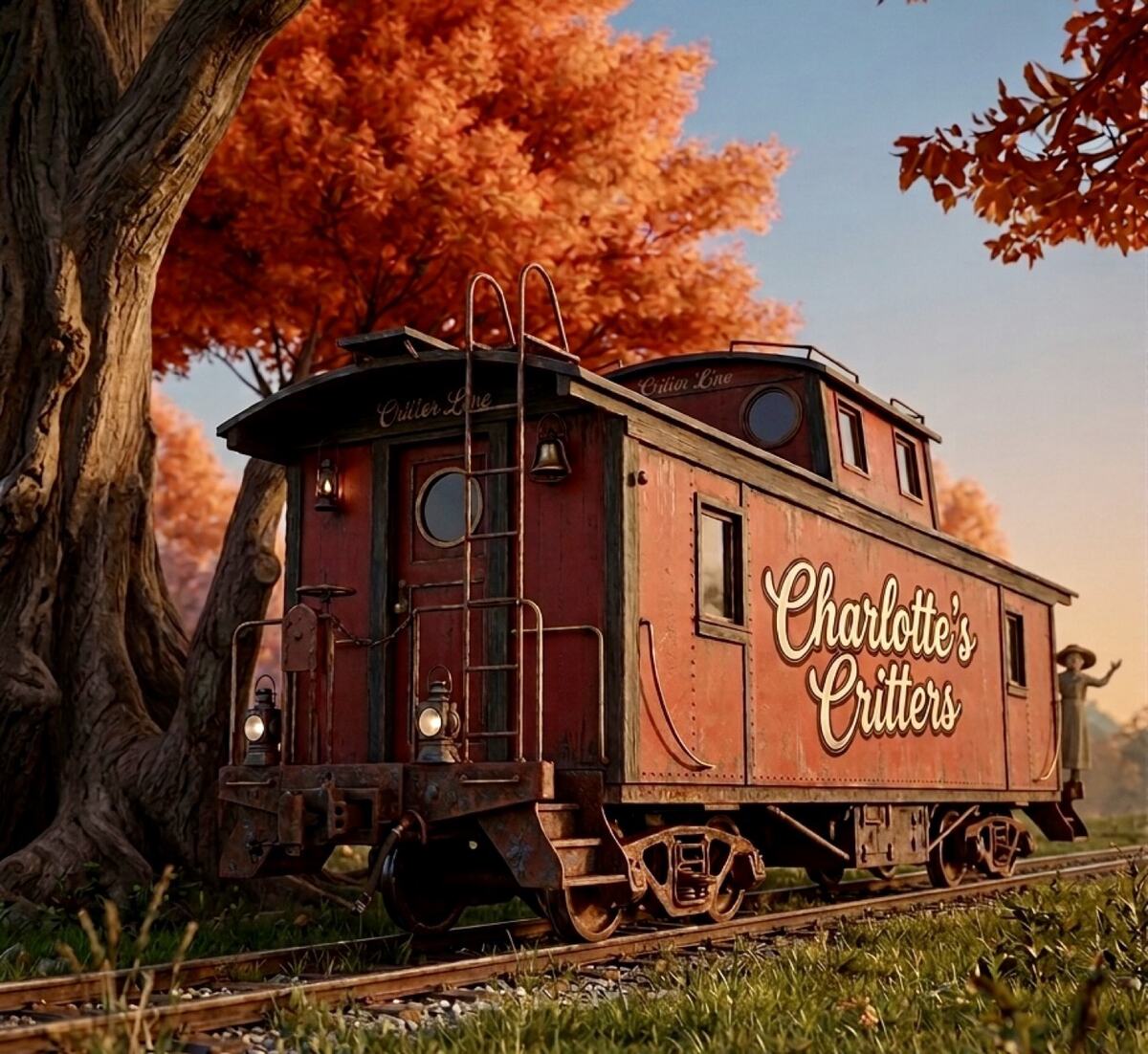
Painted Charlotte’s Critters on the rust-red flank. Lettering on the cupola reads Critter Line. The platform bell is not for stations. It is for timelines.
From the pasture the caboose is an honest railroad car: rivets, lanterns, a ladder to the roof, a round window in the door, trucks that remember freight. It sits on a short spur under the big oak as if a train once ended there and forgot to take its last car home. That is the story the neighbors are welcome to keep.
When the bell rings once for home, Louise is already on the lane. She does not ride the wormholes. She receives what the wormholes bring.
Step through the door and the floor does not agree with the outside. The aisle runs farther than the hill. Lanterns hang in a line that does not end. Hay bales, rescue crates, water barrels, a rack of lead ropes, and a row of coats in sizes no one living on the farm has worn yet — they wait in a hall that was never built with a tape measure.
The Dodecahedron is bigger on the inside. So is the caboose. One holds the old Ozark wonders. The other holds the work.
Duckster’s bay
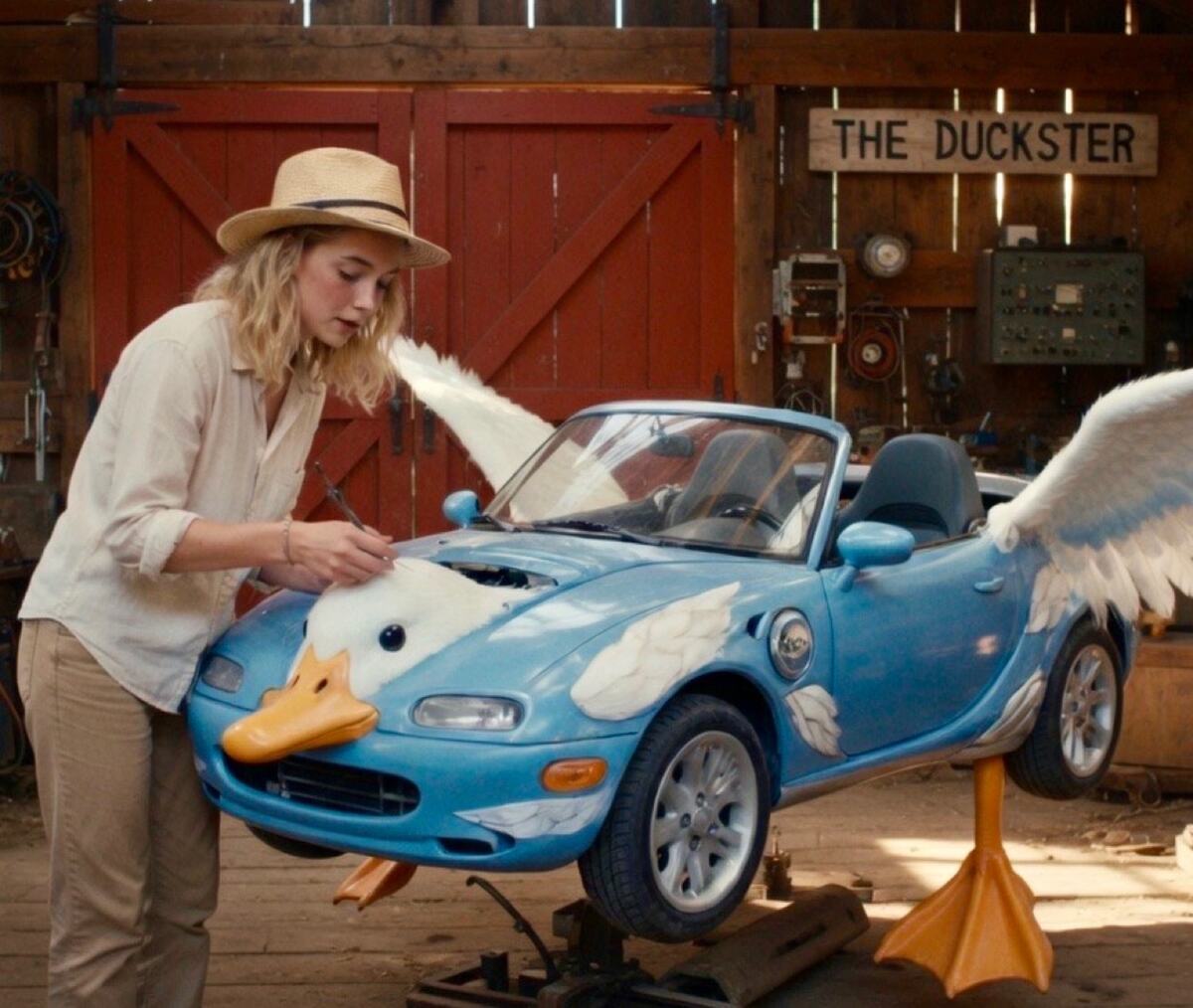
Dolly’s personal vehicle, the Duckster, is stored inside the caboose the way a good knife is stored in a kitchen — close, oiled, not shown off. When a run needs a smaller mouth than a railroad car, Duckster goes first. When the run is finished, Duckster comes home to the same bay, under the same lantern, as if it never left the farm.
Louise on the home spur
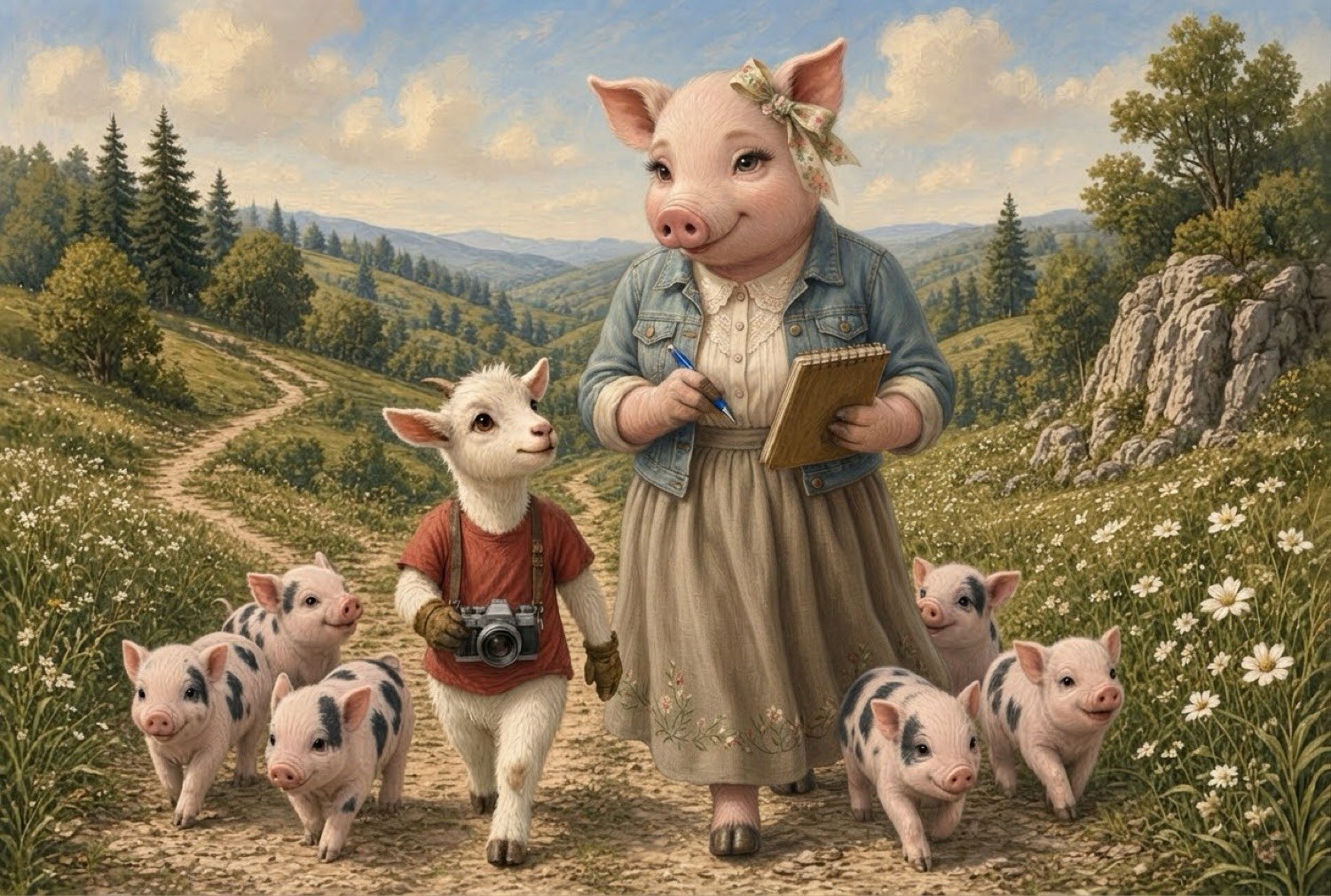
Louise is the adult sow who keeps inventory and marketing for Arkatype Farms. Pad in one hand, pencil in the other, denim jacket over a Sunday collar — she walks the lane as if the whole county were a ledger that still has empty lines.
Charlotte and Dolly bring the critters. Louise greets them. She counts heads against the lantern sheet, asks what kind of quiet they need, and finds dwellings around the farm: a dry corner for a timid pair, a sunny run for the ones who arrived already talking with their feet, a sty near the kitchen garden for anyone who remembers slop as a kindness.
Marketing, on this farm, is not a billboard. It is Louise knowing who arrived, who has a stall, and which story the Goat Maiden may tell at a wedding without giving the wormholes away. When the story may be told in the county paper, Buttercup “Scoop” Nibbles walks the lane with her — red shirt, work gloves, camera on a strap — field desk of Ozarks Goat News. Scoop takes the picture the paper is allowed to print. She leaves the blue in the air alone.
The caboose keeps the secret of the rails. Louise keeps the list of who lives here now. Scoop keeps the frame honest. Inkhorn — features, vest pocket, spiral pad — writes the sentence that can sit beside the picture at Ozarks Goat News.
How a wormhole is taken
Charlotte stands the cupola. Dolly stands the platform. The rails in front of the trucks stop being Ozarks dirt and start being a year that still needs a last car. There is a blue in the air some mornings that Professor Gruff will not print and the caboose does not explain. The bell rings once for going and once for home.
Schedules are not posted. The farm is preparing a refuge, and refuge does not run on a timetable. If a critter is standing in the weather of 1936 or 2031, the Critter Line is already late — and still, somehow, on time.
Read the lantern sheets →